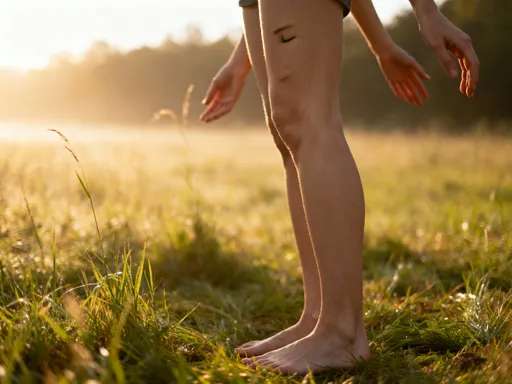
Time Turned Back: My Rehab Journey to Age Gracefully
Aging isn’t just about wrinkles or gray hair—it’s how your body moves, recovers, and feels every single day. After years of pushing through fatigue and stiffness, I discovered that targeted rehabilitation isn’t just for injuries. It’s a powerful tool for slowing down the clock. This is how science-backed recovery strategies transformed my energy, mobility, and outlook—naturally and sustainably. What if the key to aging well isn’t found in a bottle or a cream, but in the way we move, rest, and rebuild? For many women in their 30s to 50s, the subtle signs of physical decline often go unnoticed until they become impossible to ignore—morning stiffness, difficulty climbing stairs, or the slow return of energy after simple tasks. These aren’t just inconveniences; they’re signals from the body asking for attention.
The Hidden Cost of Aging: When Recovery Slows Down
As the years pass, many begin to accept stiffness, low energy, and prolonged recovery as unavoidable parts of aging. Yet, these symptoms are not simply the price of time—they are indicators of deeper physiological shifts that can be addressed. One of the most underrecognized aspects of aging is the decline in the body’s ability to repair and regenerate tissues. Starting in the mid-30s, collagen production decreases by about 1% per year, leading to less elastic connective tissue, stiffer joints, and slower healing. At the same time, muscle mass begins a gradual decline—known as sarcopenia—averaging 3–8% per decade after age 30. These changes compromise mobility, balance, and overall resilience.
Equally important is the aging of the nervous system. Neural pathways responsible for coordination and muscle activation become less efficient, contributing to that feeling of being “clumsy” or uncoordinated. Reflexes slow, and the brain-to-muscle communication weakens, making movements less precise and increasing the risk of strain. These shifts are often subtle, creeping in over years, but their cumulative effect can be profound. A simple twist that once caused no issue might now lead to a sprain, or a day of gardening could result in days of discomfort.
Yet, this decline is not inevitable in the way many assume. The body retains a remarkable capacity for adaptation at any age. The real issue lies not in time itself, but in how we respond to its effects. Traditional views of rehabilitation focus on recovery after injury—fixing what’s broken. But a growing body of research supports a broader understanding: rehab is not just repair, it is maintenance. When applied proactively, rehabilitation strategies can preserve joint health, sustain muscle function, and support nervous system efficiency. This shift in perspective—from reactive to preventive—is essential for anyone seeking to age with strength and vitality.
Ignoring these changes often leads to a cycle of reduced activity, further deconditioning, and increased reliance on pain management. But by recognizing the early signs—like difficulty rising from a chair without using your hands or needing extra time to warm up before movement—individuals can intervene before limitations become disabling. The goal is not to turn back time, but to change the trajectory of how the body ages. With the right approach, the later decades can be marked not by decline, but by sustained function and improved quality of life.
Why Traditional Anti-Aging Misses the Mark
The anti-aging industry is vast, with billions spent annually on creams, supplements, and cosmetic procedures promising to turn back the clock. While some of these products may improve appearance, they often fail to address the core issue: functional aging. Looking younger does not always mean feeling younger. A smooth complexion or fewer fine lines cannot compensate for stiff hips, weak knees, or low stamina. True vitality comes not from how the skin looks, but from how the body performs—how easily one bends, walks, carries groceries, or plays with grandchildren.
Studies have shown that physical capacity in midlife is a stronger predictor of long-term health than traditional markers like body mass index (BMI) or cholesterol levels. One landmark study published in the European Heart Journal found that midlife cardiorespiratory fitness was more strongly associated with reduced risk of chronic disease and early mortality than weight or blood pressure. This suggests that the ability to move well is not just a lifestyle benefit—it is a vital sign of health. Yet, most anti-aging efforts focus on surface-level solutions, leaving the foundation of physical function unattended.
Consider joint stability. As we age, ligaments and tendons lose elasticity, and the muscles that support joints weaken. Without targeted attention, this leads to compensatory movement patterns—ways of moving that place extra stress on certain areas. Over time, this increases wear and tear, contributing to discomfort and reduced mobility. Similarly, muscle resilience—the ability to absorb force and recover quickly—diminishes without proper stimulation. This is why a simple misstep might lead to a fall, or why daily tasks become increasingly taxing.
The nervous system also plays a critical role in youthful function. It governs balance, coordination, and the timing of muscle contractions. When neural efficiency declines, movements become less fluid and more effortful. Yet, this system is highly adaptable. Through specific movement practices, neural pathways can be retrained, improving control and reducing the risk of injury. These internal systems—musculoskeletal, neurological, and metabolic—are far more influential in long-term well-being than appearance alone.
The gap in traditional anti-aging approaches lies in their failure to integrate movement as medicine. Skincare routines and antioxidant supplements have their place, but they cannot replace the biological benefits of targeted physical rehabilitation. By focusing only on the outer signs of aging, many miss the opportunity to preserve the inner machinery that keeps the body strong, balanced, and capable. True anti-aging is not about hiding age—it’s about supporting the body’s ability to function well within it.
The Science Behind Rehab as Anti-Aging Medicine
Rehabilitation, when applied systematically, activates the body’s innate self-repair mechanisms. Far from being a passive process, rehab involves precise, controlled movement that signals the body to rebuild, strengthen, and optimize function. At the cellular level, this begins with mechanotransduction—the process by which physical forces are converted into biochemical signals. When tissues are loaded in a controlled way, cells respond by producing more collagen, strengthening connective tissue, and improving joint integrity. This is not speculation; it is measurable physiology.
One of the key drivers of aging is chronic low-grade inflammation, often referred to as “inflammaging.” This persistent state can damage tissues, impair healing, and contribute to conditions like arthritis and cardiovascular disease. Structured rehabilitation programs have been shown to reduce inflammatory markers such as C-reactive protein (CRP) and interleukin-6 (IL-6). Controlled movement enhances lymphatic flow, which helps clear metabolic waste and immune byproducts from tissues. Unlike the circulatory system, the lymphatic system lacks a pump—it relies on muscle contractions to move fluid. Regular, intentional movement thus becomes a natural detoxification process, supporting immune health and tissue recovery.
Another critical benefit of rehab is improved mitochondrial function. Mitochondria are the energy factories within cells, and their efficiency declines with age. Poor mitochondrial health is linked to fatigue, muscle weakness, and slower recovery. Rehabilitation exercises, particularly those involving eccentric loading (lengthening of muscle under tension), have been shown to stimulate mitochondrial biogenesis—the creation of new mitochondria. This means cells can produce energy more efficiently, leading to increased stamina and faster recovery after exertion.
Neuromuscular coordination is also enhanced through rehab. The brain and muscles communicate via electrical signals, and this communication can degrade over time. Targeted exercises that emphasize precision, balance, and timing help rewire neural pathways, improving muscle activation and movement efficiency. This is particularly important for fall prevention and maintaining independence in later years. Research from the Journal of the American Geriatrics Society shows that balance and strength training can reduce fall risk by up to 40% in older adults.
Perhaps most importantly, rehabilitation supports joint health through progressive loading. Joints thrive on movement—cartilage receives nutrients through compression and release, much like a sponge absorbing and expelling fluid. Without regular, varied motion, cartilage can thin and degenerate. Rehab programs that include range-of-motion exercises, joint mobilizations, and controlled strength training help maintain cartilage health and delay degenerative changes. This is not about high-impact exercise or extreme fitness; it is about consistent, intelligent movement that respects the body’s limits while challenging it to adapt.
My Turning Point: From Fatigue to Functional Renewal
At 48, I hit a wall. It wasn’t dramatic—a series of small frustrations that built up over time. I could no longer bend down to tie my shoes without wincing. Stairs left me breathless. I woke up stiff every morning, needing ten minutes just to feel “loose” enough to start the day. I dismissed it as normal, something all women “just go through” at this stage. But deep down, I knew something was off. I wasn’t injured, yet I felt broken. My energy was low, my mood was flat, and I began avoiding activities I once loved—hiking, dancing, even long walks with friends.
What changed was a conversation with a rehabilitation specialist. She didn’t focus on my symptoms in isolation; instead, she looked at how I moved as a whole. Through a detailed assessment, she identified imbalances—tight hip flexors, weak glutes, poor core engagement, and inefficient breathing patterns. These weren’t injuries, but movement dysfunctions that had developed over years of sedentary work, repetitive motions, and unaddressed strain. The good news? They were correctable.
I began a personalized rehab program focused on three pillars: restoring mobility, rebuilding strength through eccentric loading, and recalibrating my nervous system. The first few weeks were humbling. Simple exercises—like standing on one leg or moving through controlled lunges—felt challenging. But within a month, I noticed changes. I could bend down without pain. I climbed stairs with ease. The morning stiffness began to fade. My energy improved not because I was doing more, but because my body was recovering better.
The most profound shift was psychological. For the first time in years, I felt in control of my body. I wasn’t chasing youth—I was reclaiming function. This wasn’t about looking better in a mirror; it was about feeling capable, confident, and present in my daily life. The emotional lift that came with physical renewal was unexpected but deeply meaningful. I slept better, thought more clearly, and engaged more fully with my family. The journey wasn’t about erasing age—it was about honoring it with strength and care.
The Core Rehab Pillars That Changed My Body
Three evidence-based methods became the foundation of my transformation: neuromuscular re-education, progressive joint loading, and breath-integrated movement. Each played a distinct role in restoring my body’s natural function. These are not quick fixes or trendy workouts—they are sustainable, science-supported practices that build resilience over time.
Neuromuscular re-education focuses on improving the communication between the brain and muscles. Over time, poor habits—like slouching at a desk or favoring one side of the body—can lead to inefficient movement patterns. This method uses specific exercises to retrain motor control, enhancing balance, coordination, and precision. For example, single-leg stands with eye closure challenge the nervous system to maintain stability without visual input, strengthening proprioception. Over time, this reduces the risk of falls and improves everyday movement quality.
Progressive joint loading involves gradually increasing the stress placed on joints through controlled, repetitive motion. This is not about heavy weights or high impact. It’s about signaling the body to strengthen bones, ligaments, and cartilage through consistent use. Walking, stepping, and gentle resistance exercises stimulate bone density and joint health. Research shows that even low-impact loading can increase bone mineral density in postmenopausal women, reducing fracture risk. The key is consistency and progression—starting within comfort and slowly increasing challenge.
Breath-integrated movement ties the respiratory system to physical function. Many people unknowingly hold their breath or breathe shallowly during activity, which increases tension and reduces oxygen delivery. By synchronizing breath with movement—such as exhaling during exertion—individuals can improve core stability, reduce stress hormones, and enhance recovery. Practices like diaphragmatic breathing and rhythmic movement patterns activate the parasympathetic nervous system, promoting relaxation and repair. This is especially valuable for women managing stress, fatigue, or hormonal shifts.
These pillars work together. Neuromuscular re-education improves control, joint loading builds structural strength, and breath integration supports recovery and calm. Together, they create a system of care that addresses the body as a whole. The results came not from intensity, but from consistency. Small, daily practices added up to significant change.
How to Start: Building a Personalized Rehab Routine
You do not need an injury or a diagnosis to benefit from rehabilitation. The earlier you begin, the greater the long-term payoff. The first step is awareness—assessing your current movement baseline. Simple tests can reveal areas of limitation: Can you touch your toes without bending your knees? Can you stand on one leg for 30 seconds? Can you rotate your torso fully while seated? These are not pass-fail exams, but indicators of functional health.
Next, seek professional guidance. A licensed physical therapist or rehabilitation specialist can perform a comprehensive assessment, identifying imbalances, restrictions, and inefficient patterns. This is not a luxury—it is an investment in long-term well-being. A trained professional can design a program tailored to your needs, ensuring safety and effectiveness. They can also help distinguish between normal aging and issues that require medical attention.
Start with accessible exercises that build confidence and consistency. Gentle joint mobilizations—like ankle circles, wrist rotations, and shoulder rolls—can improve circulation and reduce stiffness. Daily walking with attention to posture and arm swing supports joint health and cardiovascular function. Incorporate short sessions of breath-focused movement, such as seated diaphragmatic breathing or slow, controlled squats synchronized with breath.
Progress by adding structure: aim for three to four sessions per week, each lasting 20–30 minutes. Track progress not by weight or appearance, but by function—how you feel when you rise from a chair, carry laundry, or play with children. Celebrate small wins: less stiffness, easier movement, better sleep. Over time, introduce more complex movements, such as lunges with rotation or single-leg balances with arm movements, under professional guidance.
The goal is not perfection, but sustainability. A rehab routine should fit into real life—around work, family, and responsibilities. Even ten minutes a day can make a difference when done consistently. The key is to treat movement as non-negotiable self-care, just like brushing your teeth or eating nourishing meals.
Long-Term Gains: More Than Just Movement
The benefits of consistent rehabilitation extend far beyond flexibility and strength. Over time, I noticed improvements in areas I hadn’t expected. My sleep deepened—fewer nighttime awakenings, easier falling asleep. My mental clarity sharpened; I felt more focused at work and more present with my family. Emotional resilience grew—I handled stress with greater calm, no longer reacting to small setbacks with frustration or fatigue.
These changes are not coincidental. The body’s ability to recover influences every system. When physical recovery improves, so does nervous system regulation. Chronic tension and hypervigilance decrease, allowing the body to shift from “fight or flight” to “rest and digest.” This state supports healing, digestion, and emotional balance. Hormonal rhythms stabilize, contributing to better energy and mood.
Feeling capable restores confidence. When you can move without fear of pain, when you can keep up with life’s demands, you engage more fully. This shift impacts relationships, work, and self-worth. Aging does not have to mean decline. It can be a time of refinement, wisdom, and strength—if you invest in recovery.
Rehabilitation is not a temporary fix. It is a lifelong commitment to the body you live in. By embracing it as a form of self-respect, women can age not with resignation, but with grace, power, and vitality. Time may move forward, but how we move through it is within our control.