How Pilates Quietly Changed My Emotional Life
Have you ever felt emotionally overwhelmed but didn’t know how to calm your mind? I was there—stressed, scattered, and stuck in my head. Then I tried Pilates. It wasn’t just about movement; it became a daily practice in emotional balance. Over time, I noticed real shifts: less anxiety, more clarity, and a stronger sense of control. This isn’t a cure, but a practical, natural way to support mental well-being through mindful movement. What began as an experiment in physical fitness quietly transformed my emotional life in ways I never expected. It taught me that healing the mind doesn’t always require words or medication—sometimes, it begins with breath, alignment, and presence.
The Emotional Burnout I Didn’t See Coming
For years, I wore busyness like a badge of honor. Juggling work, family responsibilities, and household duties, I believed that pushing through fatigue was a sign of strength. But slowly, the weight of constant demands began to show—not just in my energy levels, but in my emotional state. I found myself snapping at loved ones over small things, lying awake at night with racing thoughts, and feeling a persistent sense of unease that no amount of rest could soothe. I wasn’t clinically depressed, but I was emotionally depleted. The exhaustion wasn’t just mental—it lived in my body. My shoulders were permanently tight, my jaw clenched without realizing it, and my breath shallow, as if I were always bracing for the next demand.
What surprised me most was how closely my physical tension mirrored my inner turmoil. Each knot in my back seemed to correspond with a worry I hadn’t processed. The stiffness in my neck reflected the weight of unspoken stress. I began to see that my body wasn’t just reacting to stress—it was storing it. I tried meditation and journaling, which helped, but something was still missing. I needed a way to release the tension that had settled deep in my muscles and nervous system. That’s when a friend suggested Pilates—not as a fitness trend, but as a way to reconnect with my body in a gentle, intentional way. I went in skeptical, expecting another form of exercise, but what I found was something far more transformative.
Why Movement Matters for Emotions (Not Just Muscles)
Modern life often treats the mind and body as separate entities, especially when it comes to emotional health. We talk about therapy for the mind and exercise for the body, as if they operate in isolation. But science increasingly shows that emotional well-being is deeply rooted in physical experience. The nervous system, which regulates both movement and mood, doesn’t distinguish between emotional and physical stress. When we feel anxious, our body responds with increased heart rate, shallow breathing, and muscle tension—responses designed for survival, not long-term living. Over time, chronic activation of this stress response can lead to emotional fatigue, irritability, and difficulty concentrating.
Mindful movement practices like Pilates help interrupt this cycle by sending signals of safety to the brain. Controlled, coordinated movement paired with conscious breathing activates the parasympathetic nervous system—the part responsible for rest and recovery. This reduces the production of cortisol, the primary stress hormone, and promotes a state of calm. Research has shown that regular participation in low-impact, mindful exercise is associated with lower levels of anxiety and improved emotional regulation. One study published in the Journal of Clinical Psychology found that individuals who engaged in mindful movement practices reported significant reductions in rumination—the repetitive, negative thinking that often accompanies stress and mild depression.
Additionally, movement increases blood flow to the brain, delivering oxygen and nutrients that support cognitive function and emotional stability. It also stimulates the release of endorphins and neurotransmitters like serotonin and dopamine, which play key roles in mood regulation. But unlike high-intensity workouts that can sometimes increase stress on the body, Pilates offers a balanced approach—challenging enough to build strength and focus, but gentle enough to promote relaxation. It bridges the gap between physical activity and emotional care, offering a holistic way to support mental health without medication or drastic lifestyle changes.
What Pilates Actually Is—Beyond the Mat Hype
Despite its growing popularity, Pilates is often misunderstood. Many people assume it’s just another form of stretching or core work, something you do to get a flatter stomach or better posture. While those benefits are real, they only scratch the surface of what Pilates truly offers. Developed by Joseph Pilates in the early 20th century, the method was originally designed as a system of rehabilitation and total body conditioning. At its core, Pilates is about mindful movement—each exercise is performed with precision, control, and full attention to breath and alignment.
The six foundational principles of Pilates—concentration, control, centering, precision, flow, and breath—are not just instructions for movement; they are a framework for presence. Concentration means fully engaging the mind in each motion. Control emphasizes smooth, deliberate actions over momentum. Centering refers to initiating movement from the core, often called the “powerhouse” in Pilates terminology. Precision ensures that each movement is executed correctly, reducing strain and increasing effectiveness. Flow encourages seamless transitions between exercises, creating a meditative rhythm. And breath is woven throughout, used not just to oxygenate the body, but to coordinate movement and calm the nervous system.
Unlike many fitness routines that focus on speed or intensity, Pilates prioritizes quality over quantity. It’s not about how many reps you can do, but how well you do them. This shift in focus makes it uniquely suited for emotional regulation. By training the body to move with awareness, Pilates trains the mind to slow down, observe, and respond rather than react. It’s not a quick fix or a trendy workout—it’s a practice of embodiment, a way to inhabit your body more fully and, in doing so, find greater emotional clarity.
How Pilates Became My Emotional Anchor
My first few Pilates sessions were humbling. I expected to breeze through the exercises, but I quickly realized how disconnected I was from my own body. Simple movements like pelvic curls or the hundred left me struggling to coordinate breath and motion. I felt frustrated, even embarrassed, at how much focus it required. But by the third session, something shifted. I began to notice sensations I had ignored for years—the subtle engagement of deep abdominal muscles, the way my spine lengthened when I aligned properly, the quieting of my thoughts when I focused on inhaling for five counts and exhaling for five.
Then came the unexpected moments—times when emotions surfaced during practice. Once, while holding a side-lying leg lift, I felt a sudden wave of sadness, not tied to any specific memory, but simply present. Instead of pushing it away, I stayed with the sensation, breathing into it, allowing it to move through me without judgment. Another time, after a particularly stressful day, a short Pilates routine helped me release the tension in my shoulders and, almost instantly, my mood lifted. It was as if the movement had created space for emotions to be felt and released, rather than stored.
These experiences taught me that Pilates wasn’t just shaping my body—it was reshaping my relationship with my emotions. By creating a consistent space for mindful movement, I developed a tool I could turn to when stress arose. It became my emotional anchor, a practice I could rely on to ground myself, regain perspective, and reconnect with a sense of calm. Over time, I stopped seeing it as just exercise and started viewing it as a form of self-care, as essential to my well-being as sleep or nutrition.
The 4 Key Pilates Practices That Support Emotional Balance
As my practice deepened, I began to recognize specific elements of Pilates that had the most profound impact on my emotional state. These weren’t advanced techniques, but foundational practices accessible to anyone, regardless of experience or fitness level. Each one offered a simple yet powerful way to influence both body and mind.
Breathwork as Reset Button: Diaphragmatic breathing, a cornerstone of Pilates, became my go-to tool for calming anxiety. Unlike the shallow chest breathing common during stress, diaphragmatic breathing engages the full capacity of the lungs, stimulating the vagus nerve and triggering the body’s relaxation response. Practicing this during Pilates—inhaling deeply through the nose, expanding the ribs, and exhaling fully—taught me how to use breath as a reset button. Now, even off the mat, I use this technique when I feel overwhelmed, taking a few slow, deep breaths to regain composure.
Centering for Grounding: In Pilates, every movement begins with centering—drawing attention to the core and engaging the deep abdominal muscles. This physical act became a metaphor for emotional stability. When I felt scattered or reactive, I would pause and mentally “center,” recalling the feeling of activation in my core. This simple internal cue helped me feel more grounded, as if I had a stable foundation from which to respond to life’s challenges. Over time, this practice improved my sense of self-trust and emotional resilience.
Slow Movement for Mental Slowing: One of the most striking aspects of Pilates is its emphasis on slow, controlled motion. In a world that values speed and productivity, moving slowly felt almost radical. But I soon realized that deliberate movement had a direct effect on my mental pace. When I slowed down physically, my thoughts followed. The constant mental chatter quieted, replaced by a sense of presence. This taught me that stillness doesn’t have to mean inactivity—sometimes, moving slowly with full attention is the most effective way to find peace.
Mindful Repetition for Emotional Regulation: Pilates relies on repetition—not mindless repetition, but repetition with awareness. Each time I performed a familiar exercise, I focused on refining my form, deepening my breath, or noticing new sensations. This consistency built not only physical strength but emotional resilience. It reminded me that progress is gradual, that small, repeated actions lead to lasting change. This mindset helped me become more patient with myself, especially during emotional setbacks, knowing that healing is not linear but cumulative.
Making It Real: Simple Ways to Start (No Studio Needed)
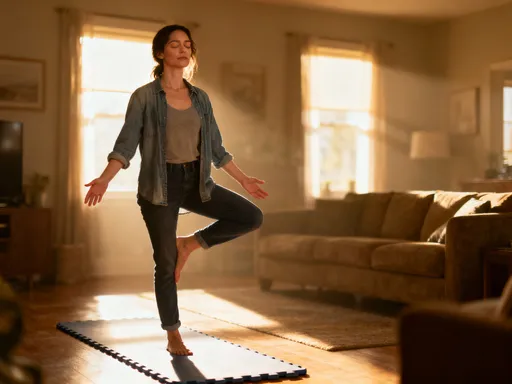
One of the most empowering aspects of Pilates is that it doesn’t require special equipment or a studio membership. While in-person classes offer valuable guidance, especially for beginners, a home practice can be just as effective with the right resources. For those new to Pilates, starting with short, manageable sessions is key. A 10-minute routine in the morning or before bed can make a noticeable difference in mood and energy.
A simple beginner sequence might include: pelvic tilts to warm up the spine, the hundred for breath and core engagement, single-leg stretches to improve coordination, and spine twists for mobility. These exercises can be done on a mat or even a carpeted floor. The most important thing is consistency, not duration. Even five focused minutes a day can begin to shift your nervous system toward calm.
When choosing online resources, look for instructors who emphasize alignment, breath, and control over speed or intensity. Reputable platforms often feature certified Pilates teachers with clear cues and modifications for different levels. Avoid videos that treat Pilates like a cardio workout or push for extreme flexibility. The goal is mindful movement, not performance. Additionally, integrating Pilates into a busy schedule doesn’t have to mean carving out large blocks of time. Try doing a few exercises while waiting for coffee to brew, or use a short session as a transition between work and family time. The practice adapts to life, not the other way around.
Long-Term Shifts: What Changed After Months of Practice
After several months of consistent Pilates practice, the changes in my emotional life became undeniable. I noticed that I was less reactive in stressful situations—instead of snapping when interrupted, I could pause and respond more thoughtfully. My ability to focus improved, not just during exercise, but throughout the day. I felt a greater sense of inner stability, as if I had developed an internal compass that helped me navigate uncertainty with more grace.
Perhaps the most meaningful shift was in my relationship with myself. I became more attuned to my body’s signals—when I was tired, when I was holding tension, when I needed rest. This body awareness translated into better emotional choices. I learned to recognize the early signs of burnout and take preventive action, whether that meant doing a short Pilates session, stepping away from my desk, or simply breathing deeply. I stopped seeing self-care as a luxury and started treating it as a necessity.
Importantly, Pilates didn’t eliminate stress or negative emotions—life still brings challenges. But it gave me tools to move through them with greater resilience. I no longer feel at the mercy of my thoughts or moods. Instead, I have a practice that helps me return to center, again and again. This isn’t about perfection; it’s about progress. It’s about showing up for yourself, one breath, one movement at a time.
Pilates didn’t fix everything—but it gave me tools I didn’t know I needed. By reconnecting with my body, I found a quieter, clearer mind. It’s not magic, just consistent, mindful movement that supports emotional resilience. For anyone feeling emotionally drained, this practice offers a gentle, proven path toward balance—no promises, just progress.