How I Found Calm Without Cigarettes or Wine
For years, I reached for a cigarette when stressed and poured a drink to unwind—until I realized I was numbing my emotions, not managing them. Quitting smoking and cutting back on alcohol didn’t just change my body; it reshaped my mind. This is the real talk about chasing psychological balance, the messy middle, and how small shifts in mindset and habit can make a lasting difference—no magic, just momentum. It wasn’t a single moment that changed everything, but a series of quiet realizations: that I no longer recognized my own reactions, that my energy dipped unpredictably, and that calm felt like something I had to borrow rather than something I could generate. This journey isn’t about willpower or purity. It’s about learning how to feel again, and discovering that true peace isn’t found in a glass or a pack, but in the space between breaths, in the stillness we’ve been taught to fear.
The Breaking Point: When Coping Became a Trap
There was no dramatic health scare, no intervention, no single event that forced my hand. The turning point came slowly, through a growing sense of disconnection. I would light a cigarette after a tense phone call, telling myself it was just to relax, but deep down I knew I was avoiding the emotion—letting the smoke carry away what I didn’t want to face. Evenings ended with a glass of wine, then two, then three, each sip a quiet promise that the day’s weight would dissolve. But instead of relief, I began to feel heavier. Anxiety didn’t vanish—it lingered, low and constant, like a hum beneath daily life. Sleep became fragmented. Mornings were dull, my thoughts foggy, as if I were moving through water.
What I hadn’t fully acknowledged was that smoking and drinking had become emotional tools, not just habits. They were my go-to strategies for managing frustration, loneliness, and overwhelm. The problem wasn’t the substances themselves, but the way they short-circuited my ability to process feelings. I wasn’t coping—I was postponing. Over time, this created a cycle: stress builds, I reach for a crutch, the emotion is suppressed but not resolved, and so it returns, stronger and more insistent. The more I relied on these tools, the less capable I felt of handling life’s ordinary pressures without them.
Psychological balance began to feel like a distant memory. I craved relief but feared the growing dependency. I worried that without these rituals, I wouldn’t know how to function. This internal conflict—wanting to feel better but resisting the very change that could bring it—was exhausting. It wasn’t until I admitted that I was using substances to avoid feeling that I could begin to imagine a different way. The goal wasn’t just to quit, but to rebuild a relationship with my emotions, one where I could sit with discomfort without needing to escape it.
Why We Rely on Smoke and Spirits: The Mind-Body Connection
The reason smoking and drinking feel so effective in the moment isn’t just habit—it’s neuroscience. Nicotine acts quickly on the brain’s reward system, increasing dopamine and acetylcholine, which can create a fleeting sense of alertness and calm. Alcohol, though a depressant, initially reduces activity in the amygdala, the brain region responsible for fear and stress responses. For a brief window, both substances can dull emotional pain, quiet racing thoughts, and create a false sense of control. This isn’t coincidence; it’s chemistry designed to feel like relief.
But this relief is short-lived and comes at a cost. Over time, the brain adapts to these artificial inputs, reducing its natural production of calming neurotransmitters like GABA and serotonin. The more we rely on external substances to regulate mood, the less equipped we become to do it on our own. This creates a dependency loop: we need more of the substance to achieve the same effect, and in between doses, we feel more anxious, irritable, and emotionally raw. What once felt like a tool for relaxation becomes a contributor to instability.
The illusion of control is powerful. We tell ourselves we’re choosing to smoke or drink to unwind, but often, the choice is made before we’re even aware of it. A stressful meeting ends, and without thinking, we reach for a cigarette. It’s Friday evening, and the routine calls for wine. These behaviors become automatic, reinforced by context and repetition. The brain learns to associate certain cues—time of day, location, emotional state—with the reward of temporary relief. This is how coping mechanisms turn into compulsions: not because we lack willpower, but because the brain prioritizes familiar patterns, even when they no longer serve us.
Understanding this mind-body connection was crucial. It helped me see that my reliance on smoke and spirits wasn’t a personal failing, but a predictable response to repeated use of powerful mood modulators. This shift in perspective—seeing dependency as a physiological adaptation rather than a moral weakness—removed shame and opened space for change. It allowed me to approach the process with curiosity instead of self-judgment, and to focus on rebuilding my brain’s natural capacity for emotional regulation.
Reframing the Goal: From Deprivation to Emotional Rebuilding
When I first considered cutting back, I framed it as loss: giving up something comforting, enjoyable, familiar. I imagined long evenings without wine, stressful days without the ritual of a cigarette break. This mindset made the prospect feel unbearable. It wasn’t until I shifted my perspective that progress became possible. I began to see quitting not as deprivation, but as reclamation—a chance to recover mental clarity, emotional range, and a sense of agency I hadn’t realized I’d lost.
Psychological balance isn’t the absence of stress or discomfort. It’s the ability to experience emotions without being overwhelmed by them. It’s feeling anxious and still making a decision, feeling sad and still showing up, feeling angry and still choosing a response. This kind of balance isn’t passive; it’s built through practice. Emotional resilience, like physical strength, weakens when unused and strengthens with consistent effort. Suppressing feelings with substances is like avoiding the gym and expecting your muscles to grow. The more we outsource emotional regulation, the more our internal capacity atrophies.
One of the most helpful mindset shifts was replacing guilt with curiosity. Instead of beating myself up for reaching for a cigarette during a tough moment, I started asking, What was I trying to feel? What was I trying to avoid? This subtle change turned moments of weakness into opportunities for insight. I began to see cravings not as failures, but as signals—clues pointing to unmet needs, unresolved stress, or emotional patterns I hadn’t yet addressed.
Another key shift was recognizing that healing isn’t linear. There were days when I felt lighter, more present, and others when old urges returned with intensity. Instead of interpreting setbacks as proof that I’d failed, I learned to see them as part of the process. Each time I paused, questioned the urge, and chose differently—even if only for a few minutes—I was reinforcing a new neural pathway. The goal wasn’t perfection, but progress. And progress, I discovered, isn’t measured in days without a cigarette or weeks without wine, but in the growing ability to sit with discomfort and still choose wisely.
The Replacement Strategy: What Actually Works
Willpower alone didn’t get me through. What did work was building a system of small, sustainable replacements that addressed the function my habits had served. I didn’t just stop smoking or drinking—I replaced the rituals with new ones that provided similar benefits without the cost. The key was not to fight the urge head-on, but to redirect it with intention.
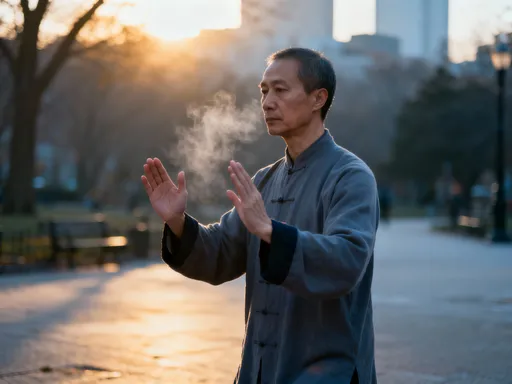
Breathwork became one of my most reliable tools. When stress rose, instead of reaching for a cigarette, I practiced a simple technique: inhaling slowly through the nose for four counts, holding for four, exhaling for six. This wasn’t just symbolic; it activated the parasympathetic nervous system, signaling the body to relax. Within minutes, my heart rate slowed, my thoughts cleared, and the urgency of the craving diminished. Over time, this practice became a conditioned response—my body learning that calm was accessible without chemicals.
Movement, even in small doses, made a significant difference. A ten-minute walk around the block, stretching after work, dancing to a favorite song—these activities released endorphins and reduced cortisol, the stress hormone. They also created a break in the day’s momentum, interrupting the automatic link between stress and substance use. I learned that intensity didn’t matter as much as consistency. A daily five-minute stretch routine was more effective than an occasional hour-long workout because it reinforced the habit of choosing care over escape.
Journaling helped me process emotions I had long avoided. Writing down my thoughts—without filtering or editing—allowed me to see patterns, name feelings, and release tension. I started with simple prompts: What am I feeling right now? What do I need? This practice increased my emotional granularity, the ability to distinguish between similar emotions like frustration, disappointment, and overwhelm. The more precisely I could identify what I was feeling, the less likely I was to numb it indiscriminately.
One unexpected but powerful tool was scheduling “worry time.” Instead of letting anxious thoughts spiral throughout the day, I set aside ten minutes each evening to focus on them. If a worry arose earlier, I noted it down and told myself I’d address it during worry time. This created a boundary between productive reflection and rumination. It also taught me that many worries lost their urgency when given a designated space. Over time, the habit of constant mental checking decreased, and with it, the urge to self-soothe with substances.
Managing Triggers Without Judgment
Triggers are inevitable. A difficult conversation, a long day, a social event—each can spark the desire to reach for an old coping mechanism. What changed wasn’t the presence of triggers, but my response to them. The first step was awareness: identifying the most common ones. For me, boredom was a major trigger, especially in the evenings. So was emotional fatigue after caregiving or work. Social settings where others were drinking also created pressure, both external and internal.
Once I recognized these patterns, I could plan responses. The 5-minute rule became a lifeline: when a craving hit, I committed to waiting five minutes before acting on it. Often, that delay was enough for the intensity to pass. During those minutes, I might step outside, drink water, or do a few deep breaths. The act of pausing disrupted the automatic response and created space for choice.
Environment design also played a role. I stopped keeping wine at home, not as a strict rule, but as a way to reduce friction. If I wanted a drink, I’d have to go out and buy it—a small barrier, but one that often gave me time to reconsider. I replaced the evening wine ritual with herbal tea, soft lighting, and music. These new cues helped rewire the association between evening wind-down and substance use.
Perhaps most important was practicing self-compassion. Slips happened. There were moments when I gave in to the urge, and instead of spiraling into guilt, I learned to treat those moments as feedback. What was I feeling? What was missing? This approach removed the shame that often follows a setback and kept me engaged in the process. Awareness, I discovered, is cumulative. The more I paid attention, the more I could anticipate triggers, the more I could respond with intention rather than reaction.
The Slow Shift: How Balance Rewires Your Brain
Change didn’t happen overnight. But over months, I began to notice subtle shifts that signaled deeper transformation. Sleep improved. I fell asleep more easily and woke up feeling rested, not groggy. My mood became more stable—fewer sudden dips into anxiety or irritability. I noticed I could focus for longer periods, my thoughts less scattered. These weren’t dramatic changes, but they added up to a new baseline.
This is the power of neuroplasticity: the brain’s ability to reorganize itself based on experience. Every time I chose breath over smoke, movement over stillness, presence over escape, I was strengthening new neural pathways. The old associations—stress equals cigarette, evening equals wine—began to weaken. New ones took their place: pause equals clarity, stillness equals awareness. This wasn’t a one-time fix, but a gradual rewiring that deepened with repetition.
One of the most profound changes was in my emotional granularity. Before, I had a limited vocabulary for feelings—stressed, tired, overwhelmed. Now, I could distinguish between frustration and disappointment, between anxiety and anticipation. This precision allowed me to respond more accurately. Instead of numbing everything with a broad-stroke solution, I could address the specific need: rest, connection, expression, or simply time.
As emotional regulation improved, so did self-trust. I began to believe that I could handle difficult moments without artificial support. This didn’t mean I never felt stressed or sad—it meant I no longer feared those feelings. I could move through them, learn from them, and emerge without damage. That sense of inner stability became the foundation for better decision-making, deeper relationships, and a quieter, more resilient mind.
Sustaining Change: Building a Life That Supports You
The final shift was one of identity. I stopped thinking of myself as someone who was “quitting” and began to see myself as someone who values balance. This wasn’t about labeling or performative identity, but about alignment. My choices began to reflect a deeper commitment to well-being, not as a goal, but as a way of living. I chose activities, relationships, and environments that supported this version of myself.
Environment mattered more than I expected. I spent more time in nature, limited screen exposure before bed, and surrounded myself with people who valued presence over performance. Social support wasn’t about finding others who had quit, but about connecting with those who encouraged authenticity and self-awareness. Even small changes—like rearranging my living space to create a calm corner for reading or tea—sent a message to my subconscious: this is a life that honors peace.
I also learned to celebrate non-milestone progress. Not every win was dramatic. Sometimes it was choosing water over wine at dinner. Sometimes it was noticing a craving and letting it pass without acting. These moments, though quiet, were victories. They reinforced the idea that change isn’t about perfection, but about showing up consistently.
I had to guard against all-or-nothing thinking—the belief that one slip meant failure, that moderation was impossible, that control had to be absolute. That mindset only set me up for collapse. Instead, I embraced flexibility. There were days when I felt strong and days when I didn’t. The practice wasn’t to be flawless, but to return, again and again, to the intention of balance. True balance, I realized, isn’t static. It’s not a destination, but a daily practice. It’s the choice, moment by moment, to respond with awareness rather than reaction, to feel rather than flee, to be present rather than numb.
Letting go of cigarettes and limiting alcohol wasn’t just a health upgrade—it was a return to myself. Psychological balance isn’t about perfection; it’s about presence. The journey isn’t linear, but every small choice to pause, breathe, and respond with awareness adds up. This isn’t a quick fix; it’s a lifelong commitment to showing up as you are—clearer, calmer, and more in control, one conscious moment at a time.